
Jewellery is primarily associated with treasure-gold, gemstones, important materials-and is thought to be objects of inborn excellence, simulated, however, the early beginnings were very different.
In ancient times, long before people learned to work with metals, jewelry was crafted from simple, non-valuable materials. In this way, both artificial and natural pieces became some of the earliest forms of decorative art.
The research and study of some primitive societies give evidence that natural materials, which have since broken down, would have undoubtedly been used in past.
It was not until a later phase of human development that individuals picked valuable and possibly scarce materials from far-away for jewelry.

Table of Contents
Ancient Jewelry
Jewelry is as old as mankind itself. Whether originating from a primitive culture or the modern developments of the East or West, and regardless of the material or style, people of all genders and age groups have always felt the need for self-adornment.
The significance of jewellery rises above time limits and geographic limits; similarities in the utilization of personal adornment become apparent in the study of various cultures.
Before historic times, as well as in contemporary cultures, jewelry is not the only ornamentation for the body, but also a means of communication. And that’s the reason it’s also popular even in today’s era and can be seen in the form of beautiful tribal jewellery.
Hierarchy prestige and furthermore power are expressed through jewellery, which can assert the status of a person in society.
What may seem like a simple decoration can actually represent loyalty to a community or to a particular person.
Men and women also express admiration for each other through jewelry.
Jewelry as an Integral Part of Fashion
Throughout history, until about the mid-20th century when jewelry went through major changes, it mostly followed the fashion trends of its time. Except for finger rings, most pieces were influenced by the neckline, sleeve length, hemline, and even the fabrics people wore. These factors shaped the type of jewelry chosen, while the choice of materials and symbols determined its purpose and meaning.
The creativity of goldsmiths has always been limitless, which is why jewelry exists in countless forms and styles. Today, anyone can explore a wide variety of Indian fashion jewelry online.
Asia 5000 to 2500 B.C.E.
Jewelry found in Western Asia, in the cradle of early civilization from around 5000 to 2500 B.C.E., shows a society that valued refined and decorative designs. It also reflects an active trade network that supplied rare materials to their goldsmiths and supported diverse local traditions.
Some of the earliest pieces included accessories made from obsidian sourced from Turkey and cowrie shells stained red from nearby coastal regions.
These items highlight how ancient communities combined local and imported materials to create meaningful personal adornments.
Ancient Egyptian Jewelry
Like the Sumerians, the ancient Egyptians—from 3100 B.C.E. to the Graeco-Roman period in the first century B.C.E.—preferred stones like lapis lazuli and carnelian.
In many Egyptian jewelry pieces, turquoise was also commonly added to this combination.
The natural resources available in their region were rich and varied, giving Egyptian jewelry makers access to an impressive range of materials. They often used organic elements along with precious stones.
Gold and other metals were found in nearby areas. Stones such as agate, amethyst, garnet, jasper, malachite, and steatite were also widely used.
These materials allowed Egyptian craftsmen to create jewelry that was both beautiful and meaningful.
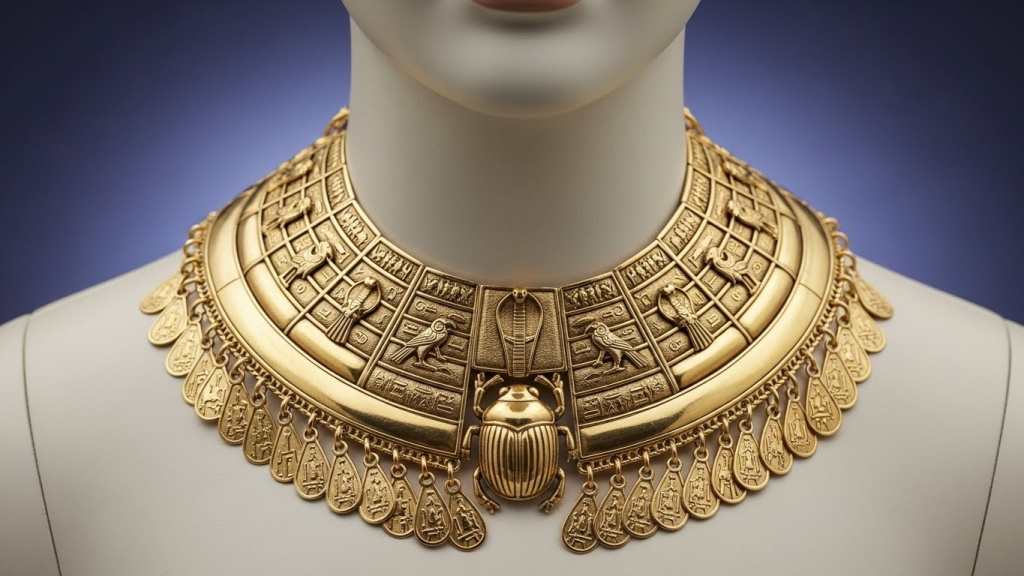
Jewelry as a Symbol of Status and Identity Across Cultures
Throughout history, jewelry has often gone beyond mere decoration to serve as a symbol of social rank, wealth, and identity.
In many civilizations, from ancient Egypt to the royal courts of Europe, the type of materials, gemstones, and designs indicated a person’s position in society.
Elaborate gold necklaces, gemstone-encrusted rings, or intricately designed brooches were not just adornments—they were statements of power, prestige, and influence.
Cultural traditions also played a role in defining identity through jewelry.
Certain patterns, motifs, or materials were associated with specific communities, clans, or ethnic groups, allowing individuals to visually express belonging.
Jewelry could signal marital status, professional role, or religious affiliation, making it an essential medium of personal and societal communication.
Even today, while fashion jewelry is widely accessible, symbolic pieces continue to hold significance.
A family heirloom, a culturally inspired design, or a signature gemstone can convey personal values and heritage, reminding wearers and observers of the deep-rooted connection between adornment and identity.
Jewelry thus remains a timeless tool for expressing status, individuality, and cultural pride across the globe.

The Role of Materials in Cultural Jewelry Traditions
Materials have always played a central role in shaping the identity and meaning of jewelry across cultures.
Different societies prized specific metals, gemstones, and natural elements not only for their beauty but also for their symbolic significance.
Gold and silver often represented wealth, power, and divine favor, while gemstones like turquoise, jade, and amethyst carried protective, spiritual, or healing properties. Organic materials such as shells, bones, and beads were used in tribal communities to signify status, achievements, or rites of passage.
The choice of material also reflected the available resources and technological advancements of a culture. For instance, regions rich in gold mines developed elaborate goldsmithing techniques, whereas coastal communities creatively used shells and coral to craft intricate adornments.
Over time, these material preferences became closely linked to cultural identity and tradition, creating a visual language that communicated values, beliefs, and social roles.
Even in modern fashion jewelry, these traditional materials continue to inspire designers, blending historical significance with contemporary aesthetics.
By understanding the role of materials, one gains a deeper appreciation not only for the artistry involved but also for the cultural stories and heritage embedded in every piece of jewelry.
