In most cultures, a watch is a quiet thing. It whispers punctuality, restraint, and maybe a touch of inherited taste. In hip-hop culture, a watch does the exact opposite—it talks. Loudly. Sometimes, before the artist even touches the mic.
Bling watches—iced-out, diamond-drenched, unapologetically radiant—are more than accessories. They are declarations. They say I made it, I survived, I’m here, and occasionally, look again.
For over four decades, hip-hop has transformed the watch from a functional object into a cultural billboard, merging horology, street economics, identity, and aspiration into a single, sparkling symbol.
This article takes a deep, technically grounded yet conversational journey through how bling watches evolved alongside hip-hop—from the Bronx in the 1980s to Miami jeweler ateliers, Swiss complications, and today’s smart, digital, and hybrid iced-out timepieces.
Whether you’re a watch enthusiast, a hip-hop historian, or someone who simply enjoys a little shine with substance, this story is about much more than diamonds.
How Did Hip-Hop Turn Watches into Symbols of Power, Identity, and Status?
Hip-hop didn’t just adopt watches—it repurposed them.
In the late 1970s and early 1980s, hip-hop emerged from economically marginalized neighborhoods, particularly the Bronx. For many early artists, traditional markers of wealth—real estate, stocks, legacy brands—were inaccessible. Jewelry became a visible, portable, and immediate signal of success.
Watches played a special role for three reasons:
- They were universally understood – Everyone knows what a watch represents: time, control, discipline.
- They were scalable – A watch could start simple and evolve into something extravagant.
- They were modifiable – Bezels, dials, bracelets—all could be customized.
When rappers iced out watches, they weren’t rejecting traditional luxury—they were re-authoring it.
A Rolex no longer whispered old money; it shouted new money. Time itself became symbolic: owning it, mastering it, bending it.
Early hip-hop didn’t care about Swiss pedigree or movement finishing. What mattered was presence. Weight. Visibility. Shine under stage lights and camera flashes. That ethos laid the foundation for everything that followed.
Why Did Miami Become the Capital of Iced-Out Excess?
If New York birthed hip-hop, Miami gave bling watches their signature look.
By the early 1990s, Miami had emerged as a crossroads of hip-hop, Latin flamboyance, nightlife wealth, and custom jewelry craftsmanship. Unlike traditional jewelers who followed conservative design rules, Miami jewelers leaned into maximalism.
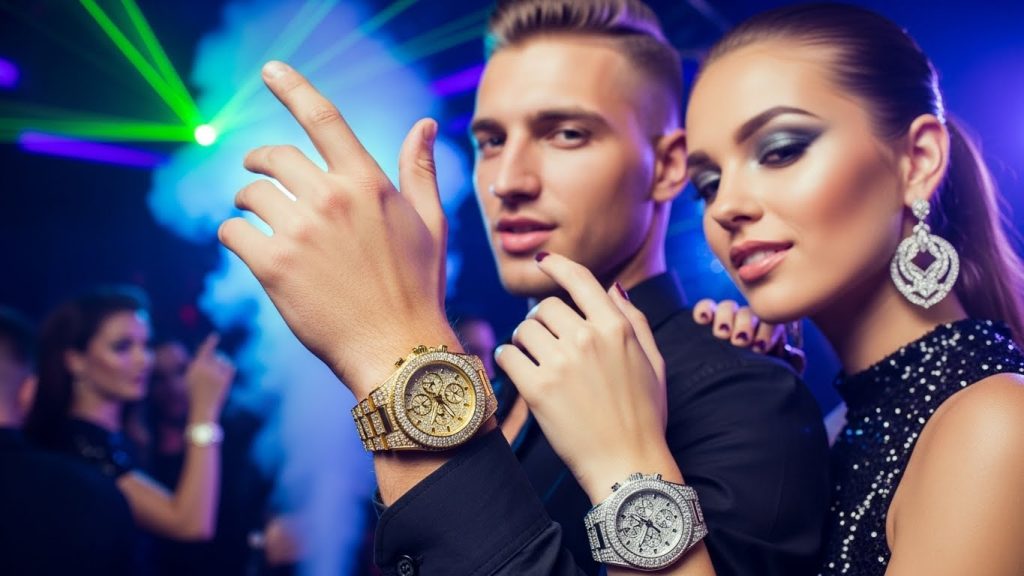
This is where the term “iced-out” truly took form—watches completely covered in diamonds, not just on the bezel but across the case, bracelet, lugs, and sometimes even the dial.
Technically speaking, this era introduced:
- Aftermarket diamond setting on luxury watches
- Pavé and micro-pavé techniques to maximize sparkle
- Non-factory modifications, often controversial among purists
Miami jewelers understood the hip-hop mindset: more is more. Symmetry mattered less than impact. The goal wasn’t subtle craftsmanship—it was visual dominance.
This regional style would soon influence the entire industry, forcing even conservative luxury brands to reckon with a new, louder consumer.
When Did Bling Watches Become Status Symbols—Not Just Accessories?
The shift from fashion statement to status symbol happened when hip-hop went mainstream.
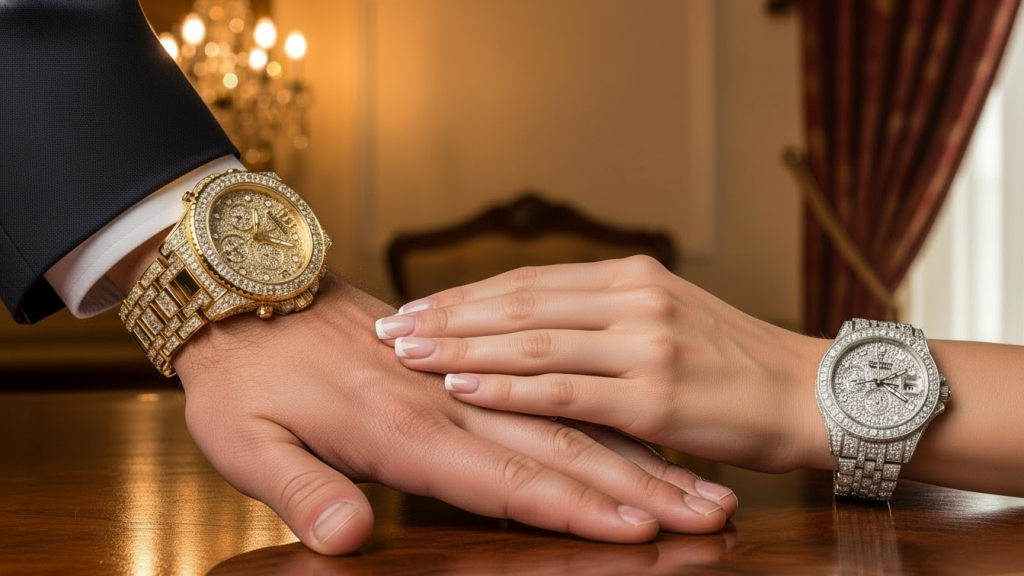
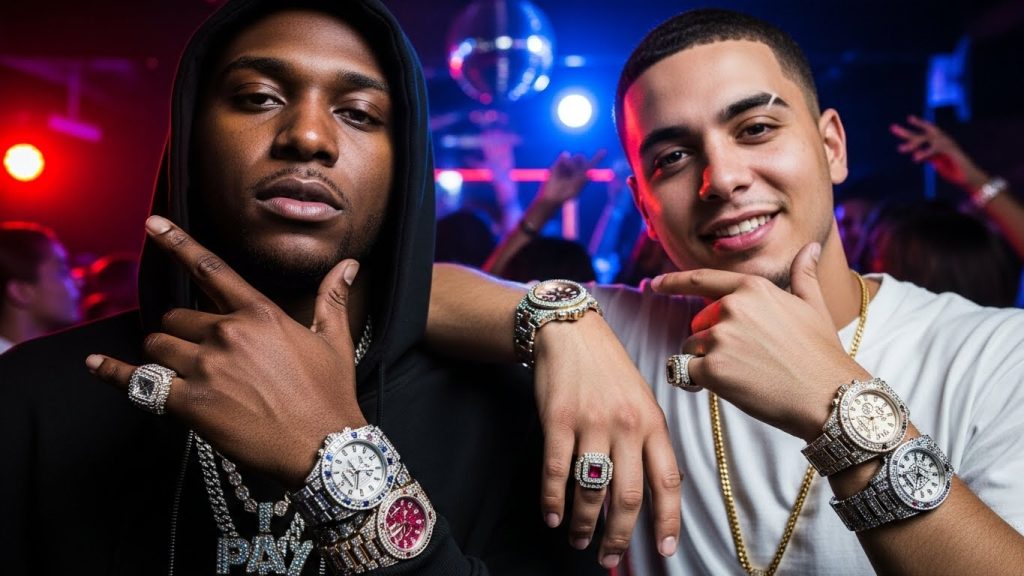
As artists like The Notorious B.I.G., Jay-Z, Nas, and later Lil Wayne and Kanye West reached global audiences, their watches became aspirational objects. A fully iced Rolex, Audemars Piguet Royal Oak, or Patek Philippe Nautilus wasn’t just expensive—it was coded.
It communicated:
- Financial success without generational wealth
- Independence from traditional gatekeepers
- Cultural relevance over institutional approval
The price escalation was dramatic. A stainless steel Rolex might retail for $10,000–$15,000. Add high-quality diamonds, custom labor, and scarcity, and the value could jump to six figures.
Below is a simplified breakdown of how value stacked up in the bling era:
| Watch Type | Base Watch Cost | Customization Cost | Cultural Value |
|---|---|---|---|
| Standard Luxury Watch | $8,000–$25,000 | $0 | Traditional prestige |
| Factory Gem-Set Watch | $30,000–$150,000 | Included | Brand-sanctioned luxury |
| Aftermarket Iced-Out Watch | $15,000–$50,000 | $20,000–$200,000 | Hip-hop status symbol |
In hip-hop, the third category often carried the highest cultural currency—even if resale purists disagreed.
Did Rappers Change the Watch Industry Itself?
Short answer: yes—whether the industry liked it or not.
Luxury watch brands were initially uncomfortable with aftermarket diamond work. From a horological standpoint, modifications could affect water resistance, structural integrity, and resale value. Brands like Rolex famously refused to service heavily modified watches.
But culture moves faster than policy.
As hip-hop’s purchasing power grew, brands quietly adapted:
- Increased factory gem-set offerings
- More experimental case materials
- Greater tolerance for bold aesthetics
Meanwhile, celebrity endorsement reshaped consumer perception. When a rapper wore a watch repeatedly—on album covers, in videos, on tour—it created emotional association stronger than any traditional ad campaign.
A watch was no longer sold on heritage alone. It was sold on story.
How Did Bling Watches Become Mainstream and Affordable?
The internet changed everything.
By the 2010s, social media platforms like Instagram and YouTube turned bling watches into shareable content. You didn’t need a record deal—just a strong aesthetic.
This democratization created multiple tiers of bling:
- High-end custom diamond watches (six to seven figures)
- Mid-range fashion bling watches using lab stones or crystals
- Entry-level digital and quartz bling watches for mass audiences
Importantly, the symbolism stayed intact even as materials changed. The shine still represented confidence, individuality, and visibility.
This is also when bling watches crossed gender lines. Women embraced iced-out designs not as derivatives, but as power statements—often mixing luxury watches with streetwear and high fashion.
What Is the New Wave: Digital, Smart, and Hybrid Bling Watches?
Modern bling watches are no longer trapped in analog tradition.
Digital Bling Watches
These focus on visual impact and accessibility. LED displays, oversized cases, and crystal embellishments dominate. While horologically simple, they excel at what bling does best—instant recognition.
Smart Bling Watches
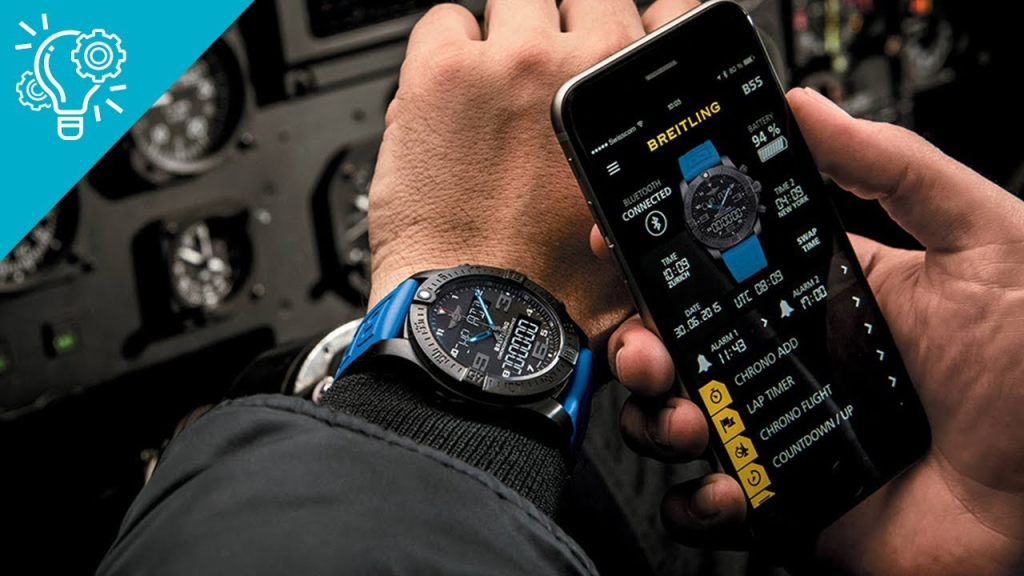
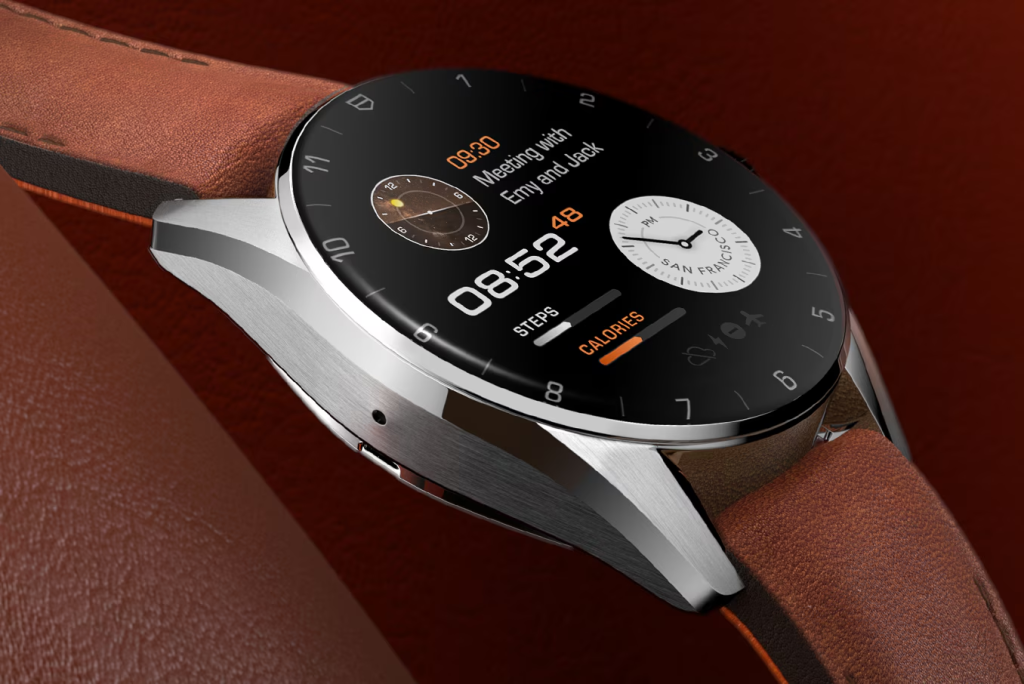
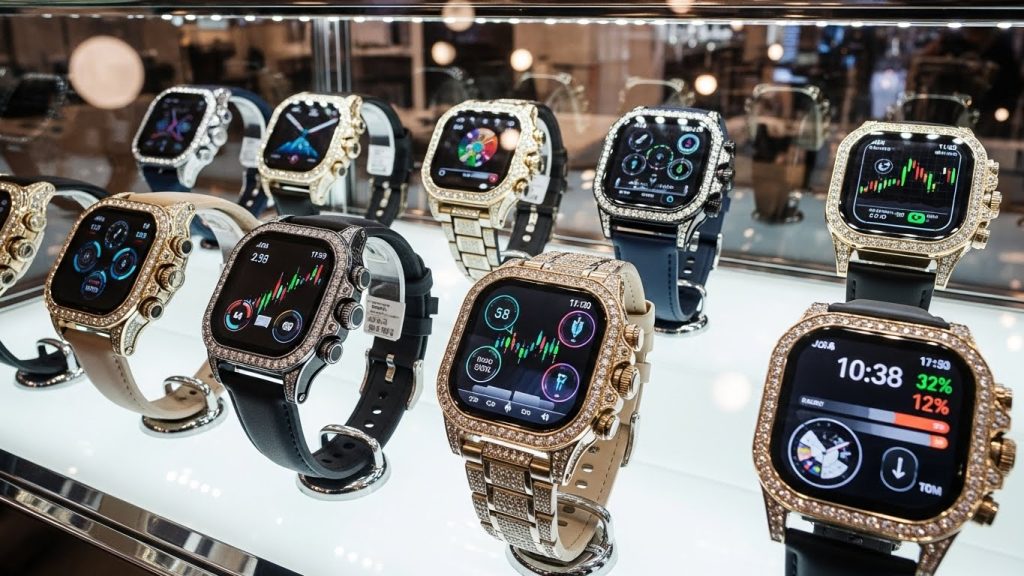
Smartwatches wrapped in iced-out shells represent a cultural evolution. Fitness tracking, notifications, and GPS now coexist with diamonds and gold tones. They reflect modern priorities: productivity and presence.
Hybrid Bling Watches
Hybrids balance tradition and tech. Analog dials paired with subtle smart features appeal to wearers who want longevity, battery efficiency, and restrained flash.
This fusion signals something important: bling is no longer anti-technology or anti-tradition. It’s adaptive.
Are Bling Watches Still Relevant—or Are They Evolving?
Bling watches haven’t disappeared. They’ve matured.
Today’s audience is more educated. They care about movements, materials, and design integrity—in addition to shine. Lab-grown diamonds, ethical sourcing, and modular customization are becoming part of the conversation.
Hip-hop itself has diversified, and so has its aesthetic language. Some artists choose minimalism. Others still ice everything. Both are valid expressions of success.
What remains constant is intent: visibility, ownership, and storytelling.
Conclusion: Why Bling Watches Still Matter
Bling watches are not accidents of taste. They are cultural artifacts.
They tell the story of people who took control of time—economically, culturally, symbolically—and made it shine. From Bronx block parties to billion-dollar brands, from diamond bezels to smart sensors, bling watches reflect hip-hop’s ability to redefine value on its own terms.
As long as hip-hop continues to evolve, innovate, and challenge convention, bling watches will remain more than accessories. They’ll remain statements—ticking loudly, unapologetically, and on their own time.