
You need extra money fast and are about to pawn your piece of jewelry or designer watch. Great idea! You can get cash on the spot, and then you will have the opportunity to retrieve your item once you have repaid the loan, interest, and any other fees.
What happens if you do not return to reclaim your pawned item? Or you may be worried about what happens if you cannot repay your loan on time.

First, how does a pawn loan work?
Many people use their valuables regularly to help make ends meet.
Oftentimes, when the need arises for short-term financial help due to an unforeseen expense, a pawn loan is the best solution.
Pawning an item is quick and easy. The borrower simply brings the item they wish to use as collateral to help secure the loan to the pawn store. The loan amount is based on a percentage of the value of the item being used as collateral. The borrower must repay the loan in full, plus interest and fees, within a set amount of time in order to get their item back from the pawn broker.
Know your options when the loan is due:
Unlike other loans, when a pawn loan is due, the borrower has multiple options. The borrower may
1) fully repay the pawn loan and retrieve the collateral item
2) pay the interest due, then renew the loan for another set amount of time, or
3) choose to default on the loan by not paying back any part of the loan, and therefore forfeit the pawned
item.
The borrower may fully repay the pawn loan to retrieve the item on or before the due date.
If you are unable to repay the loan in full when it’s due, you may be able to renegotiate the loan.
Usually, you will be required to pay the interest due from the first loan, but you will not be required to pay any on the principal part of the loan. You will be charged an additional fee each time you must renew your loan based on the amount owed, so it is an excellent idea to pay the interest plus any additional amount you can pay towards the principal balance (or borrowed amount) to decrease the overall cost of the extension of the loan.
A customer can choose to not pay back the pawn loan for any reason (they do not have to explain why to the pawn shop). Instead of repaying the borrowed money they will just relinquish the collateral items to the pawn shop. When this happens the pawn shop will sell the items as they see fit.
Not being able to pay off a pawn loan does not affect a person’s credit score. This is a major difference and benefit of pawn shop loans.
Credit is not part of the transaction. The value of the collateral items covered the amount the pawn shop loaned to the borrower. When the loan is not repaid, the pawn shop simply uses the collateral items to cover the amount of money loaned and not repaid by selling off the items. You cannot expect regular car or other secured loans taken through a bank to work this way. They will report your non-payment of the loan to credit agencies while repossessing your car. This can make it much harder to get a traditional loan or credit card in the future.
What can you do if your item is forfeited?
Although it should not be relied upon, it is not unheard of for a relinquished item to be repurchased by the person who originally pawned it at a later date.
A surrendered item that remains available for sale may have its pawn loan reactivated for the interest amount due plus fees if all components of the original pawned items remain available.
Despite what some people may believe, pawnbrokers do not set out to confiscate pawned items so that they can sell them in their shop.
In fact, it’s in the best interest of the pawn broker to have the loan repaid and the item returned to its original owner. This helps to create happy customers who are likely to return to pawn the same (or more/other) items should they need extra funds again in the future.
Pawnbrokers know that if they sell an item that was pawned, they will only make their money back once. But if you pay back your loan and recover your item, then need their services again, that same item could create repeat business for the pawn shop in the future.
What if you accidentally leave an item at a pawn shop?
Remember all that information they collected about you when you first set up the pawn loan?
The pawnbroker will use it to attempt to find you to return your items to you. They do not want to hold them if you have paid back the loan completely. They want you to get your items back.
So answer your phone when they call!! And make necessary arrangements to pick up your collateral items.
AZ Jewelry and Loan is one of the best local jewelry pawn shops to work with when you are using jewelry or other types of vintage items as your pawn loan collateral.
We give the best offers because we really know the worth of your jewelry and other high-value objects due to our vast experience with those types of items. Contact us or come in to our store to see what we can do for you.
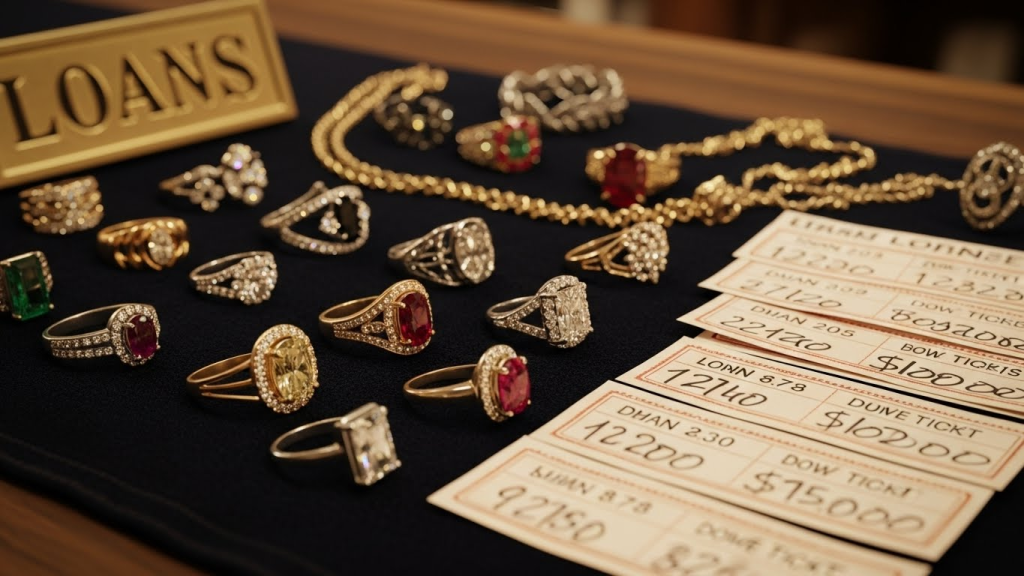
Pawn Shop Rules: How to Save Your Pawned Jewelry
When you hand over your pawned jewelry to a pawn shop, you also enter a legally binding agreement that outlines the shop’s rights and your responsibilities as a borrower.
Pawn shops operate under strict regulations, giving them the full legal right to take ownership of your pawned jewelry if you fail to repay the loan within the agreed redemption period.
Once that deadline expires, the shop is not required to notify you again or offer extensions unless its policy specifically allows it. At that point, the jewelry becomes their property, and they can legally sell it to recover the loaned amount.
Even if the sentimental or market value of the jewelry is significantly higher, the law supports the pawn shop because the agreement was signed voluntarily.
To avoid losing your pawned jewelry, it’s essential to stay proactive.
Always keep track of your ticket’s due date and the total repayment amount, which includes interest and fees.
If you’re unable to redeem the item by the deadline, consider extending the loan—many pawn shops offer extension options for a small fee.
Communicate clearly with the shop if you anticipate delays; sometimes they provide short grace periods, but only if requested in advance.
It’s also smart to borrow only what you can realistically repay, so the charges don’t become overwhelming.
Most importantly, never misplace your pawn ticket, as it acts as proof of ownership and streamlines the redemption process.
By understanding both the pawn shop’s legal rights and your own responsibilities, you can prevent unnecessary loss and ensure that your pawned jewelry stays safely in your possession.
How Interest and Fees Lead to Losing Your Pawned Jewelry?
When you pawn jewelry, the shop provides a short-term loan based on the item’s value, but what many people overlook is how quickly interest and fees can accumulate over time.
Pawn shops operate under fixed lending periods—usually 30 days, sometimes extendable for an additional fee.
Once your pawned jewelry enters this loan cycle, the shop begins applying monthly interest rates, which can range from mild to extremely high depending on your state laws and the shop’s own policies.
These percentages may seem small initially, but when they compound each month, the total amount to reclaim your jewelry can grow surprisingly fast.
Most pawn shops also charge additional fees: storage fees, appraisal fees, insurance fees, and extension fees if you want more time before redeeming your item. All these charges stack on top of the loan amount, increasing your final payment.
If you’re unable to pay the accumulating interest or extend the loan, the situation becomes risky. After the grace period ends, the pawn shop legally gains ownership of your pawned jewelry and has the right to sell it to recover its money. You lose the item permanently, even if it’s sentimental or the market value is much higher than the loan you borrowed.
Understanding these charges is crucial for making informed decisions.
If reclaiming your jewelry is important to you—especially if the piece holds emotional value—make sure you’re aware of the due dates, total charges, and possible extensions. Keeping track of these details can help you avoid losing your cherished jewelry forever. Pawn shops are not unreasonable, but they do operate strictly on timelines, and once the deadline passes, the item becomes part of their inventory.
